The story behind Dragon Sauce
How our signature Asian-Cajun sauce came to be, where it lives on the menu, and the smartest way to order it on your first visit to Boiling Dragon.

In this article
Every restaurant has the one thing that defines it. For us, it is a sauce. It is the reason the restaurant has the name it does, and it is the first thing regulars ask for by name when they sit down.
What Dragon Sauce is
Dragon Sauce is our signature blend of Cajun and Vietnamese spice. It sits in the Pick Your Sauce lineup next to Garlic Butter, Lemon Pepper, Cajun Style, and Saigon. The difference is that the others are familiar, and Dragon Sauce is the one we built from scratch.
It is hot, it is garlicky, and it is layered with aromatics that lemon and butter simply cannot reach on their own. By our scale it is the heat-forward option. A fair warning that we give every table: medium by Dragon standards lands closer to spicy in most kitchens. That is not a brag, it is a heads up.

Where it lives on the menu
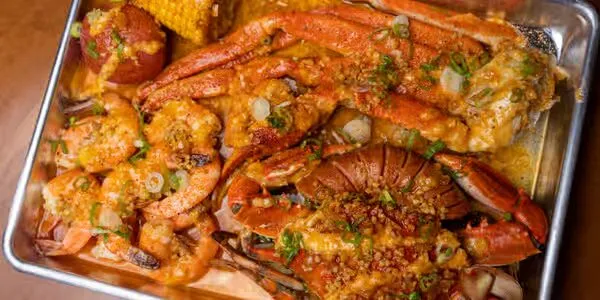
The most direct way to taste it is on a boil. The shells do a little of the work, the sauce moves through everything in the bag, and the meat never fights you for the flavor.
- Captain’s Feast with Dragon Sauce. One snow crab cluster, ten shrimp, corn, potato, and sausage, all lacquered in it, at 37.19.
- Dragon Platter. Two pounds of snow crab, two pounds of shrimp, sausage, corn, and potatoes, at 89.99. This is the group order. Ask for it half Garlic Butter and half Dragon, then watch the table negotiate territory.
- Tamarind Blue Crab at 36.99 and Feeling Crabby at 34.99. Both take well to Dragon as a finishing sauce.
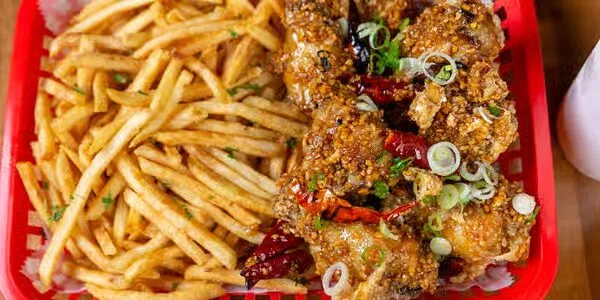
If you want the flavor without the shell work, the Dragon Wings at 17.39 are the faster route. Eight pieces of fried wings tossed in our house Dragon seasoning with sauteed garlic, onions, jalapeno, and bell peppers. About twenty minutes from order to table.
Then there is the dish that takes the restaurant’s name head on. The Dragon Bowl at 16.99. Crispy shrimp, our crispy brussels sprouts, and Dragon Sauce over rice. It is a big portion and it shares easily, and plenty of guests on Yelp, Uber Eats, and TikTok call it the star of the menu. You can see all of it on the menu.
Why two spice traditions belong in one sauce
Cajun heat and Vietnamese heat come at you from different directions. Cajun spice is earthy and warm, built on paprika, cayenne, and a deep roux logic. Vietnamese heat is brighter and more aromatic, driven by fresh chili, lemongrass, garlic, and the funk of fish sauce. Most kitchens pick a side. We grew up tasting both at the same table, so Dragon Sauce reaches for the warmth of one and the lift of the other in the same spoonful. That is the whole idea behind the restaurant in a single condiment.
How to order it on your first visit
If it is your first time, we will usually pour the Dragon Sauce on the side and let you ramp into it. Please do not take that as an insult. Full strength is a commitment, and we would rather you fall in love with it than tap out halfway through a two pound bag.
A simple plan for a first visit:
- Start with the Dragon Bowl so you taste the sauce in a friendly, rice forward setting.
- Add a boil with the sauce half and half, Garlic Butter on one side and Dragon on the other.
- If the table is winning, graduate the next pot to full Dragon.
Calling ahead
The sauce is also why people call ahead during crawfish season. Dragon-sauced crawfish moves fast and the kitchen runs hot. Call (832) 328-5123 if you want it ready for pickup, or start an order online for DoorDash and Uber Eats if you would rather have it delivered. Either way, come hungry.
Good to know
How spicy is Dragon Sauce really?
It is our hottest standard sauce. If you usually order medium elsewhere, ask for it on the side the first time so you can build up to it.
Which dish shows it off best?
The Dragon Bowl for a gentle introduction, the Dragon Wings for a quick hit, and a full boil when you are ready to commit.
Can I mix sauces on one order?
Yes, and we recommend it for groups. Half Garlic Butter and half Dragon keeps everyone at the table happy.